Addressing Challenges in Rotary Drilling Operations
Addressing Challenges in Rotary Drilling Operations
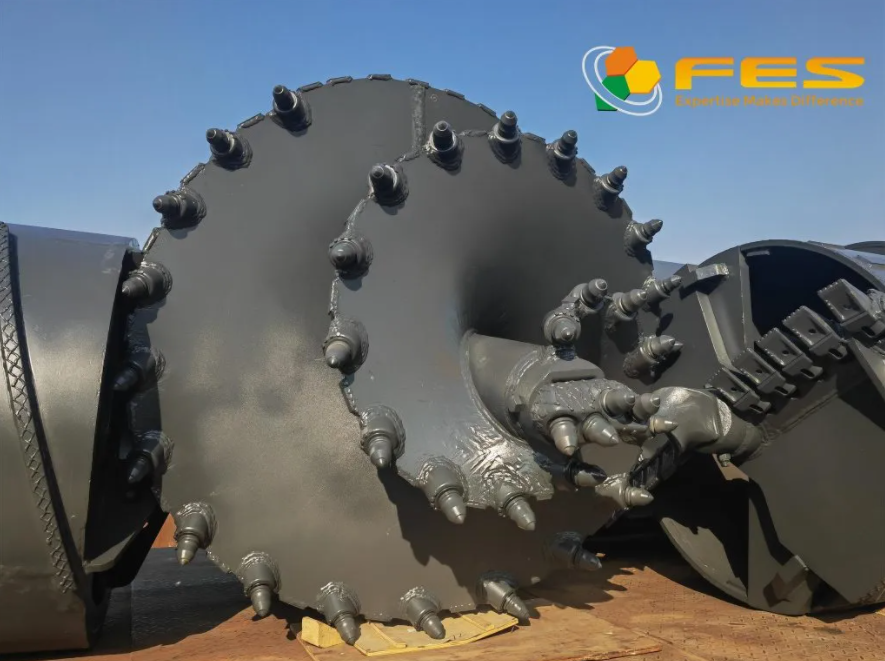
Rotary drilling rigs are highly regarded for their efficiency and versatility in pile foundation construction. However, the complexities of geological conditions often lead to a variety of challenges. If these challenges are not addressed properly, they can result in delays and pose serious safety risks. Drawing on years of on-site experience, this article examines common issues in rotary drilling and offers practical solutions.
I. Hole Collapse and Handling Strategies
Cause: Loose soil layers, fluctuating groundwater levels
Hole collapse is one of the most challenging problems in rotary drilling, often occurring in loose sand, gravel, or water-saturated soil. In a recent project on a highway bridge foundation, we faced a severe hole collapse when drilling reached a depth of 30 meters. The drilling fluid suddenly lost circulation, and a large volume of sand and water rushed into the hole, increasing resistance during the retrieval of the drill rods. The primary cause was found to be uneven sand particle grading and significant fluctuations in groundwater levels, which caused the mud wall to fail.
Solution:
To resolve this issue, we first stopped drilling and filled the hole with a mixture of clay and gravel to a depth of 4 meters, compacted with the drill bit. We then re-prepared the drilling fluid, increasing its density to 1.28 and controlling its viscosity to 28 seconds. Additionally, we added flocculant agents to improve the stability of the mud cake. Once the mud wall stabilized, we resumed drilling slowly, monitoring mud properties every meter to ensure the wall remained intact.
Prevention:
To prevent hole collapse, detailed geological analysis should be carried out before construction. High-quality mud should be prepared for loose soil layers. During drilling, ensure that the water head inside the hole is maintained 1.5–2 meters above the groundwater level. When encountering pressurized water layers, use casing to stabilize the wall, such as FES bored pile casing, with the casing extending 1 meter into stable strata.
II. Diameter Reduction and Solutions
Cause: Disturbance of soft clay leading to plastic deformation
Diameter reduction often occurs in soft clay layers or expansive rock formations. In one project, the drill bit, 1.3 meters in diameter, became stuck after being lifted and reinserted at a depth of 12 meters. The cause was determined to be the plastic flow of soft clay and the expansion of rock layers when exposed to water.
Solution:
To overcome this issue, we enlarged the drill bit by 7–12 cm and used a “slow in, fast out” drilling technique. Every 30 cm drilled, the bit was raised and lowered to expand the hole. This was repeated 2–3 times. We also adjusted the mud viscosity to 20–25 seconds, reducing its adhesion to the hole wall. In areas with expansive rock layers, gypsum or calcium chloride inhibitors were added to prevent rock expansion. Once the hole was formed, a reinforcement cage was placed quickly to minimize the exposure time of the hole walls.
III. Drill Sticking and Solutions
Cause: Unidentified obstacles, such as boulders, causing drill bit to become stuck
Drill sticking often happens unexpectedly. On a recent industrial site project, the drill bit became stuck at 18 meters. When attempting to pull the drill, the rods vibrated violently, and torque readings spiked. Upon inspection, we found an undiscovered boulder obstructing the drill.
Solution:
In this case, we avoided forcibly lifting the drill, as it could break the rods. We injected high-pressure water into the hole to clear the area around the drill bit and the boulder. The drill was slowly rotated to change its angle. If this did not work, we used the “casing drilling method.” We drilled around the boulder with a larger drill bit (20 cm larger than the original) to gradually remove the surrounding soil until the boulder was exposed, after which it was broken apart using hydraulic tools.
Another common cause of drill sticking is hole collapse leading to the burial of the drill bit. In such cases, we first pump high-concentration mud into the hole to fill the collapsed gaps, creating a stable wall. Afterward, a smaller drill bit is used to clean the sand and mud, and the drill is slowly retrieved once the drill bit is exposed.
Prevention:
To prevent drill sticking, the “First Explore, Second Slow, Third Steady” principle should be followed. Pre-drill to detect obstacles such as boulders and pipelines. Slow down the drilling speed in complex strata and monitor changes in torque and drilling pressure closely. If resistance suddenly increases, pull the drill up to inspect the situation.
IV. Key Preventative Measures
Guideline: “First Explore, Second Slow, Third Steady”
- Perform pre-drilling to identify obstacles like boulders, pipes, or other hindrances near the hole
- Slow the drilling speed when working in complex strata and monitor parameters carefully
- If drilling resistance increases unexpectedly, immediately pull up the drill and inspect
V. Conclusion
The key to resolving rotary drilling challenges is “prevention first, quick response.” Before starting, ensure thorough understanding of the geological conditions and develop a targeted construction plan. During drilling, closely monitor all parameters and address any issues promptly. By combining theoretical knowledge with on-site experienceand reliable equipment such as FES foundation drilling tools, we can ensure the smooth operation of rotary drilling, maintaining the quality and safety of pile foundation projects even in complex geological conditions.


Comments
Post a Comment